Please enjoy the latest issue of the CAHSLA Chronicle. Please don’t hesitate to send news, updates, or articles on projects, presentations, etc. for inclusion in the Chronicle to Emily Kean at any time throughout the year.
A hearty hello from your new President! First, I want to thank Mr. Matthew Cooper for his steady and inspirational leadership, Emily Kean for her stewardship of our finances and continued support of CAHSLA and all the members, and Devhra BennettJones for her keen eye and ear for keeping our meeting minutes.
I also want to welcome our leadership team: Vice President/President Elect: Devhra BennettJones, Treasurer: Brian McConnell and Secretary: Lauren Darpel.
These last couple of months have been a whirlwind. Between attending the Society of Ohio Archivists (SOA) and the Librarians, Archivists, and Museum Professionals in the History of the Health Sciences (LAMPHHS) annual meetings and taking a trip to England, I feel that I am now out from under the work that awaited me when I got back to the office.
Just last week, while accepting a new artifact (Adams Laboratory Counter) into our collection, we commented that it was June, and we are halfway through the year! I don’t know about you, but I am always shocked at how time flies. Is it because we get so busy with work and life that we don’t take the time to smell the proverbial roses or is it something else, like entropy?
I am excited about what is to come for CAHSLA during our term and to be honest I am bit nervous as I am the first non-medical librarian to be elected President. We have come a long way since 1973 when the challenge of federal funding cuts to the Inter Library Program became a reality that libraries had to find solutions to and a group of local librarians in health sciences and technical libraries worked together to resolve it.
I encourage you to read about the History of CAHSLA here. I also encourage you to share your projects, reflections and ideas with us through email and the Chronicle.
Today, our new challenge is the integration of AI into our daily work and personal lives and just like CAHSLA rose to the challenge of addressing funding cuts to ILL, we will rise to the challenge of learning about and sharing knowledge about how we are using AI in our daily work.
I look forward to all that lies ahead for CAHSLA this year!
Wishing you all a less humid summer than we usually get in the Cincinnati area.
The CAHSLA Summer Picnic Meeting was held at the French Park on Thursday, May 28. Attendees enjoyed a potluck dinner with fried chicken provider by CAHSLA, and everyone had fun playing the music trivia game that was gifted to outgoing President, Matthew Cooper.
Attendees: Matthew Cooper, Emily Kean, Amy Koshoffer, Brian McConnell, Sharon Purtee, Debbie Reichler plus Guest
Fabricated citations have increased dramatically recently and have sparked debates about how to address this problem within scholarly publishing. When these citations are discovered, those articles frequently get retracted. However, there is a time lag. So what’s a librarian to do? How can we keep retracted articles out of our literature searches?
At this year’s MLA conference, I learned about a strategy in a paper session entitled Identifying Retractions in Systematic Review Searching by Caitlin J. Bakker et al. In their presentation, the authors describe a multistep process to identify retracted papers using the citation manager Zotero and the LibKey Nomad browser extension paired with Covidence, the systematic review screening software.
Zotero has a built-in feature which automatically flags retracted articles at the item level using data from Retraction Watch. The presenters recommend running your searches and importing citations first into Zotero, followed by Covidence during title/abstract screening. They use this process first at the outset; again prior to data extraction; and finally, before submitting manuscripts for publication. For evidence synthesis review teams, adding these steps can contribute to the quality and reliability of the research, while also protecting the work of the team.
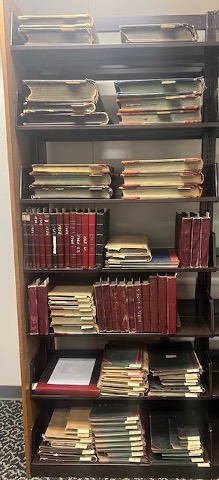
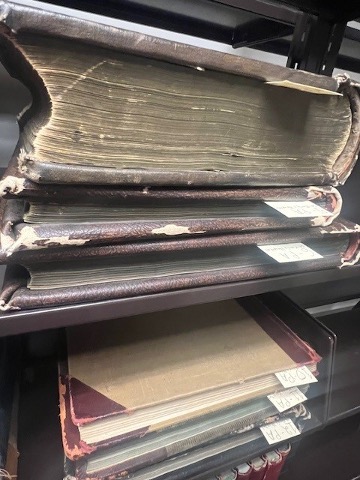
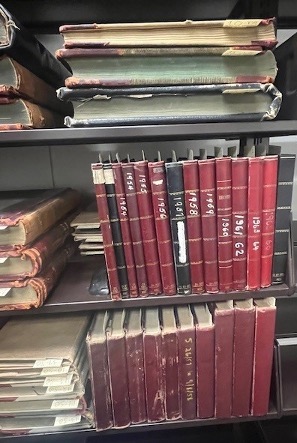
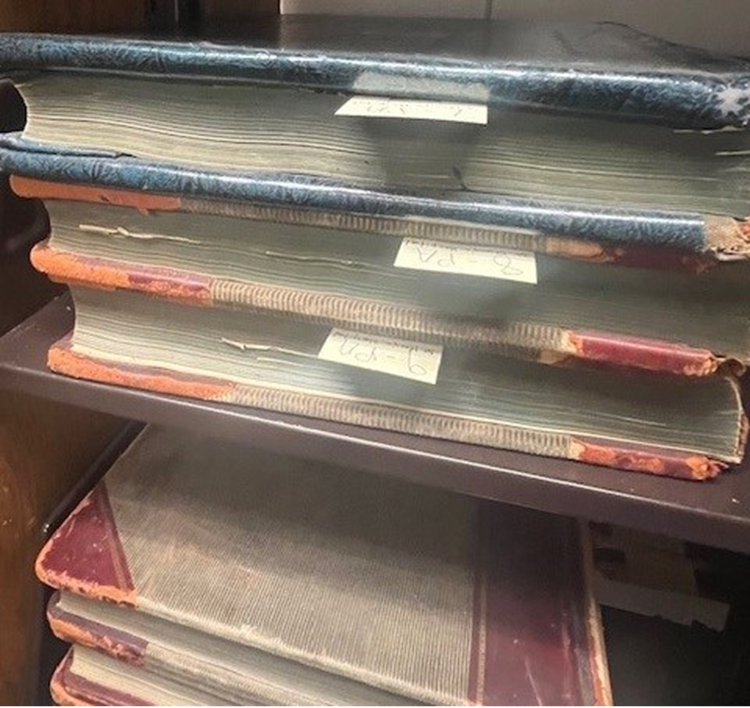
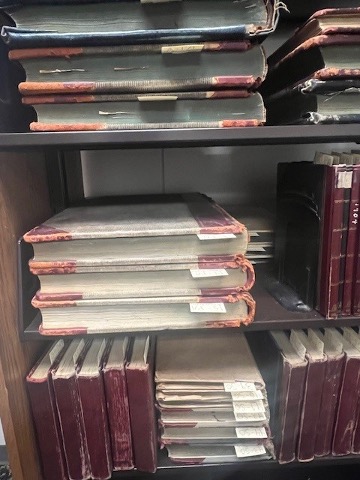
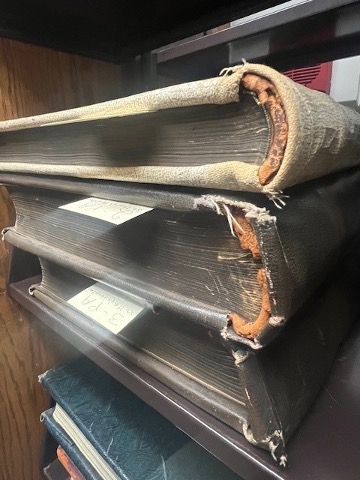
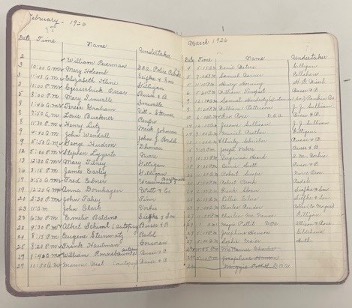
The Saint Mary’s Hospital Collection consists of ninety-three ledgers of hospital information about patient admissions, patients of German heritage, births, surgical operations, intensive care unit patients, deaths, physicians in Cincinnati, Ohio, and information about a tuberculosis outbreak in New York, New York. The hospital was founded in 1858-1859 in Cincinnati, Ohio by the Franciscan Sisters of the Poor. The archives date from 1884 to 1977.
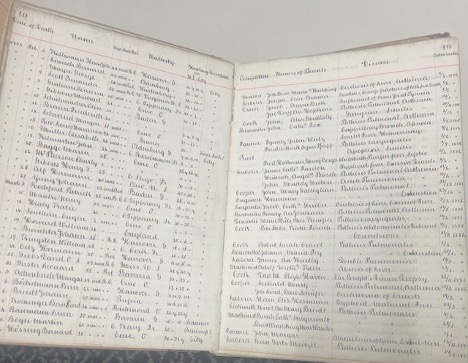
The ninety-three ledgers lists patient names, date of admittance, age, civil status, religion, birthplace, length of residency in the United States and in the City of Cincinnati, occupation, father’s name, mother’s surname prior to marriage, residence address, diagnosis, physician names, discharge date, location and the number of days in Saint Mary’s Hospital, and the patient’s condition upon discharge.The collection is arranged in thirteen series.
Series I.: Patient admissions of the St. Mary’s Hospital in Cincinnati, Ohio, 1880—1970. Twenty-nine ledgers.
Series II.: German patient admissions of the St. Mary’s Hospital in Cincinnati, Ohio, 1865—1879. Restricted due to fragility. Two ledgers.
Series III.: Patient re-admissions of the St. Mary’s Hospital in Cincinnati, Ohio, 1950—1960. Two ledgers.
Series IV.: Delivery Room Births of the St. Mary’s Hospital in Cincinnati, Ohio, 1942—1960. Five ledgers.
Series V.: Surgical Operations of the St. Mary’s Hospital in Cincinnati, Ohio, 1913—1966. Seventeen ledgers.
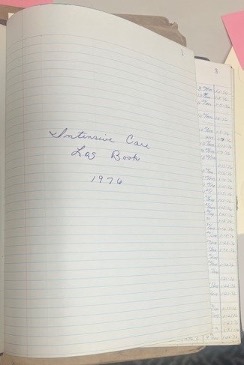
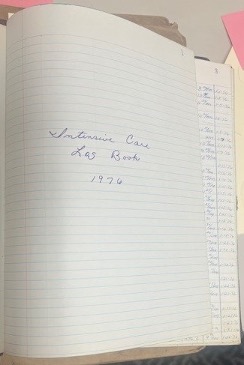
Series VI: Intensive Care Unit Patients of the St. Mary’s Hospital in Cincinnati, Ohio, 1976. One ledger.
Series VII.: Recovery Room Patients of the St. Mary’s Hospital in Cincinnati, Ohio, 1974. One ledger.
Series VIII.: Patient Case Histories of the St. Mary’s Hospital in Cincinnati, Ohio, 1898—1920. Three ledgers.
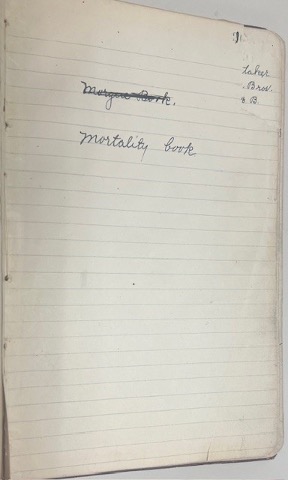
Series IX.: Patient Deaths of the St. Mary’s Hospital in Cincinnati, Ohio, 1880—1971. Ten ledgers.
Series X.: Patient’s Physicians’ records of the St. Mary’s Hospital in Cincinnati, Ohio, 1885—1922. Six ledgers.
Series XI.: Doctor’s Books of the St. Mary’s Hospital in Cincinnati, Ohio, 1947—1972. Nine ledgers.
Series XII.: Patient Registry ledgers of the St. Mary’s Hospital in Cincinnati, Ohio, 1940—1971. Seven ledgers.
Series XIII.: Patients diagnosed with tuberculosis in New York, New York, 1959—1961. One ledger.
Saint Mary’s Hospital in Cincinnati was a historic medical institution established on Betts and Linn Streets in 1858–1859 by the Sisters of the Poor of Saint Francis. Designed by architect Anthony Bley, the hospital served thousands of Cincinnati’s impoverished and German citizens. With a capacity of 325 hospital beds, Saint Mary’s Hospital treated over 2,000 patients each year. The hospital was enlarged in 1860 and again in 1875.
Saint Mary’s Hospital was well-known as an important facility for emergency cases and taking care of the medical needs of Cincinnati’s West End neighborhood. Saint Mary’s was supported by the contributions of the public and the Archdiocese of Cincinnati. The historic hospital closed on May 1, 1971. The Sisters of the Poor of Saint Francis also shaped other healthcare organizations in the Cincinnati region, including what is now Mercy Health. The Saint Mary’s Hospital Collection may be useful for research in genealogy and the social and medical history of Cincinnati in the late nineteenth century.
The Saint Mary’s Hospital Collection is available for research by appointment at the Henry R. Winkler Center for the History of the Health Professions located in the Health Sciences Library on the University of Cincinnati east campus. https://findingaids.libraries.uc.edu/repositories/4/resources/1075
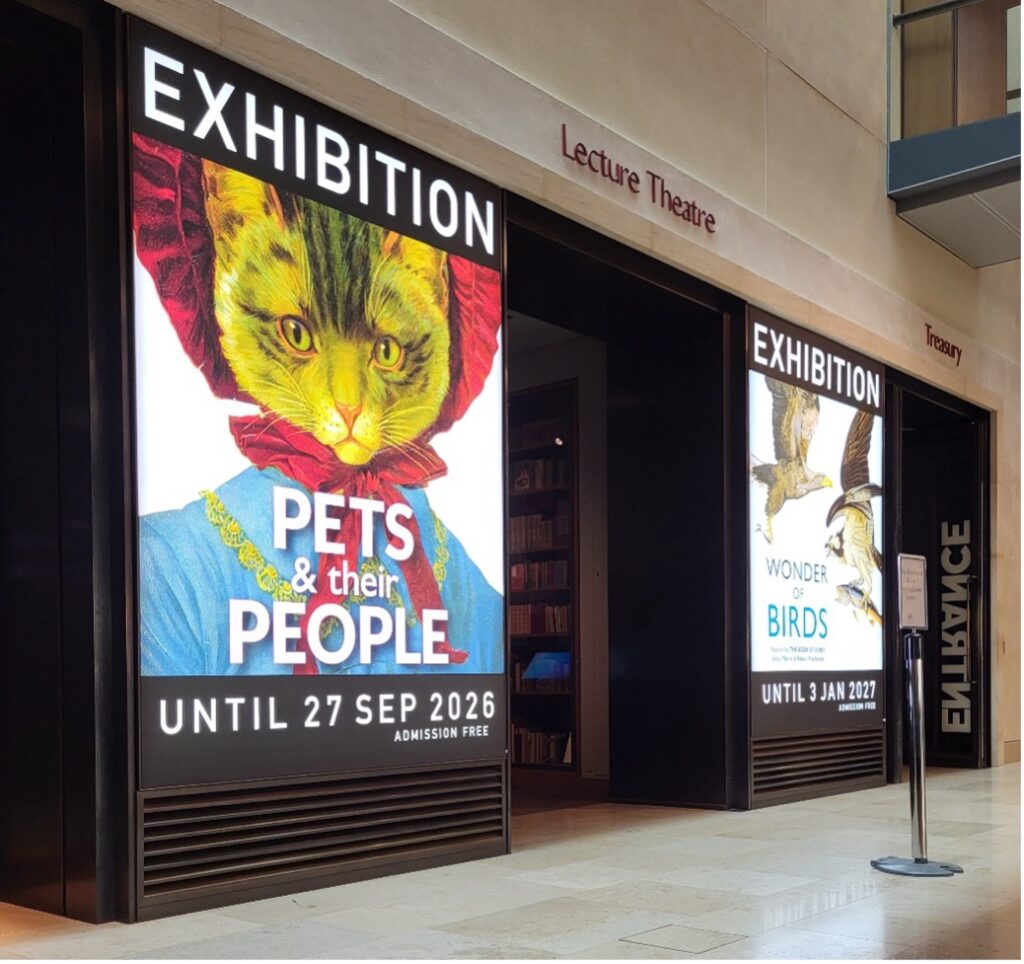
This past May, I fulfilled a childhood dream by visiting England for a solo vacation. My time there was divided into two parts: the first half in London and the second in Oxford. Between both cities, I toured many museums and libraries including the British Library, the Design Museum, Royal Botanic Gardens at Kew, the Reading Museum, and the Weston Library. It’s only natural for someone interested in and working at museums and/or libraries! At the Weston, there were two exhibits I could not help but notice while I was waiting to register as a researcher: “Wonder of Birds” and “Pets & their People.” I promised myself that once I finished my research, I would stop to see what they were all about, especially because they were free to see! For the purposes of CAHSLA, I will share more on “Pets & their People.”
The Weston Library is part of the famous Bodleian Libraries at Oxford University. Per their website:
The Bodleian Libraries at the University of Oxford is the largest university library system in the United Kingdom. It includes the principal University library – the Bodleian Library – which has been a legal deposit library for 400 years; as well as 23 libraries across Oxford including major research libraries and faculty, department, and institute libraries. Together, the Libraries hold more than 14 million printed items, over 80,000 e-journals and outstanding special collections including rare books and manuscripts, classical papyri, maps, music, art, and printed ephemera. Members of the public can explore the collections via the Bodleian’s online image portal at digital.bodleian.ox.ac.uk or by visiting the exhibition galleries in the Bodleian’s Weston Library.
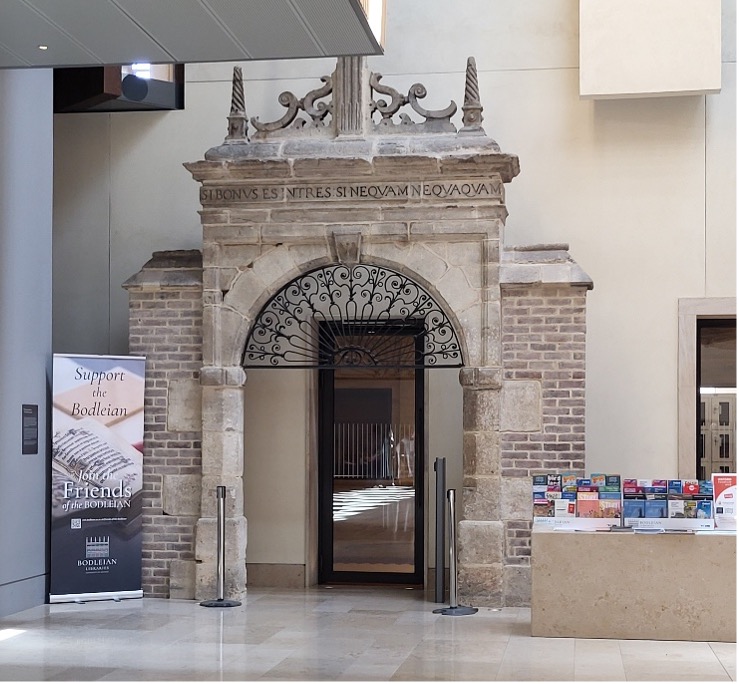
Blackwell Hall, located within the Weston, is the meeting point for many library and city tours, and is also home to a small café. It boasts an exhibit space, a treasury, and a lecture hall. You can see some of the stacks behind glass walls by peeking towards the ceiling; an old archway stands near the registration office and information desk.
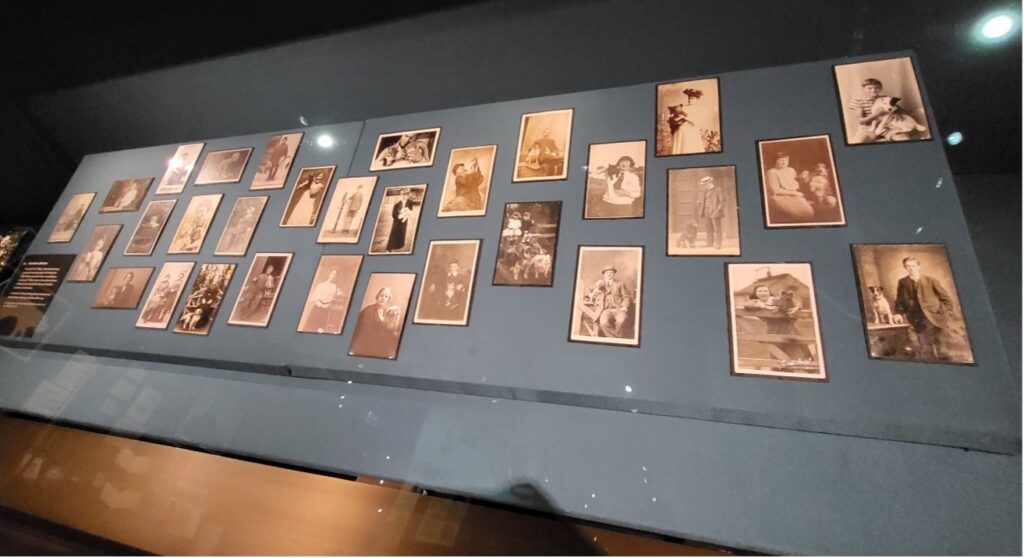
“Pets & their People” was curated by Professor Charles Foster, a veterinarian and Fellow of Exeter College, Oxford, who also wrote a book with the same title. The thesis of “Pets” was to look at the connections between humans and animals, or the inverse. It delved into the history of humans keeping animals as pets, starting as aids with hunting and farming. It then presented the evolution of how and why these wild animals became domesticated over time, highlighting the emotional support they provide us Homo sapiens, especially with loneliness. It shows how we continue to humanize pets by making them one with our family and friendship circles, treating them as children, and mourning practices when they pass away. They even showed how we accessorize them with outfits and carry them in bags or emulate them: one anonymous Oxfordian had a pup-play mask on display.
All in all, it was more compelling than I could have imagined. I enjoyed seeing historic images of people posing with their pets as well as submissions of pet portraits from Oxford University students and locals. I also liked that other pets were highlighted, such as birds and snakes. I am glad to have stopped in and have a few highlights that intrigued me or made me smile:
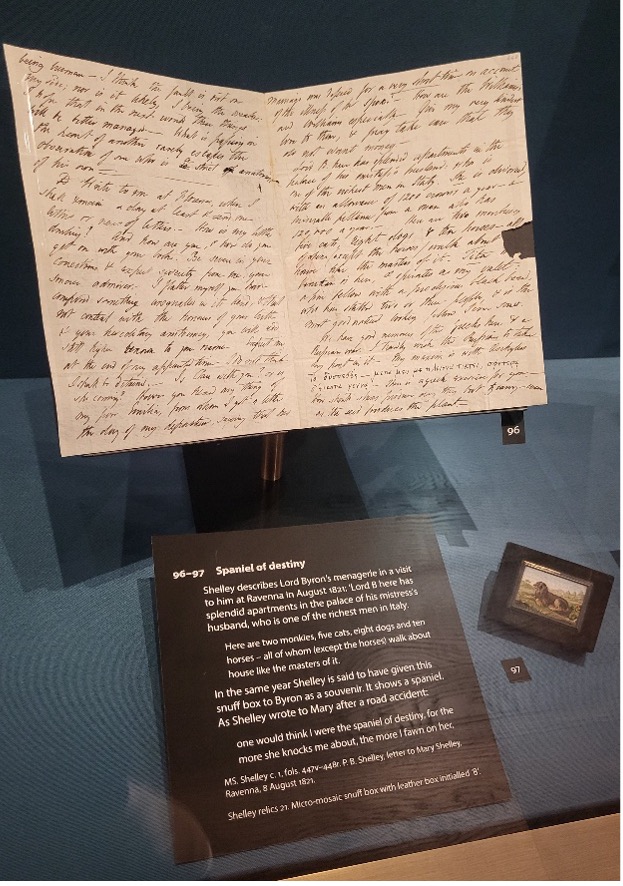
A letter written in 1821 by poet Percy Shelley to his wife, author Mary Shelley while he was in Ravenna, Italy. In it, he describes to her that their friend Lord Byron was visiting and brought along his pets: two monkeys, five cats, and eight dogs. Apparently, they were running around the house as if it was their own! Ten horses were also present but, thankfully, remained outside. The snuff box featuring a spaniel was a gift from Percy to “Lord B.”
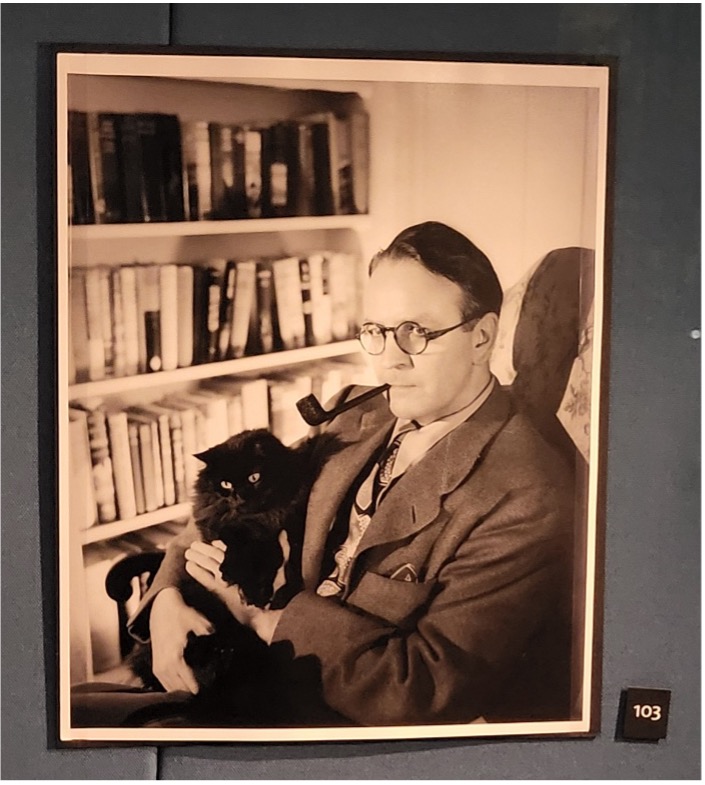
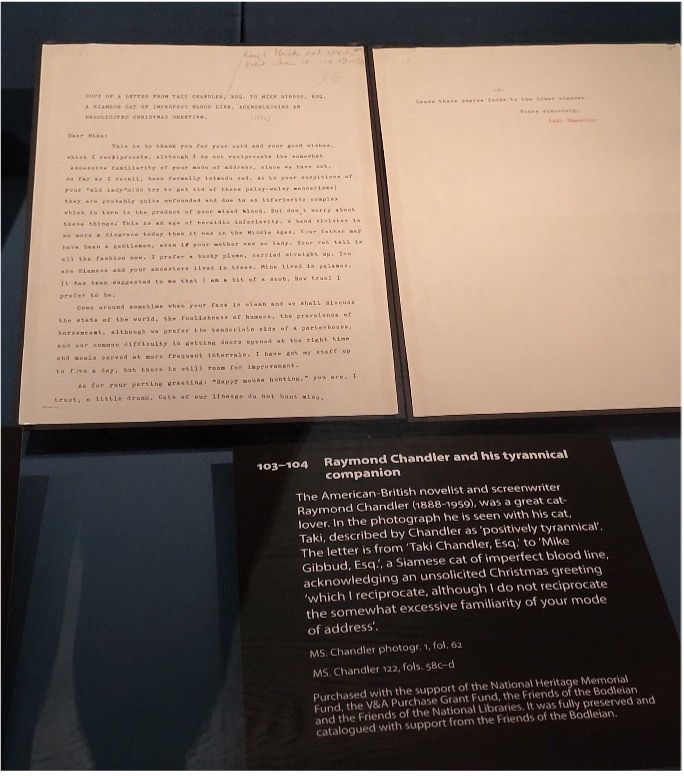
Raymond Chandler, author and screenwriter (The Big Sleep and Double Indemnity respectfully), was featured with his pet cat, Taki. The letter on display is one “written” by Taki to a Siamese named Mike.
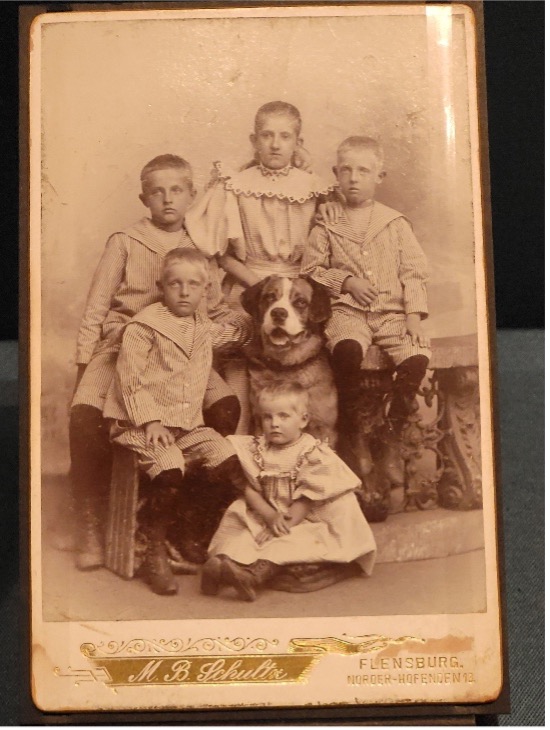
I loved this portrait of a German family’s children and their St. Bernard in the center!
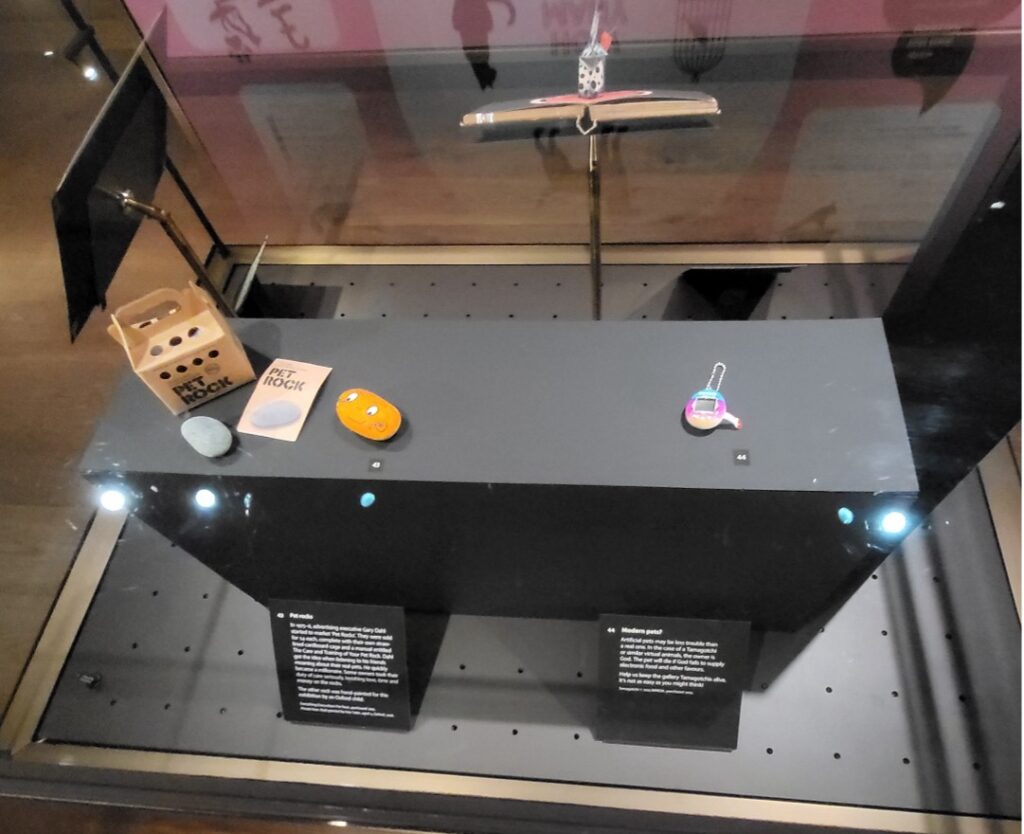
Pets in pop culture were also featured in the exhibit, like cartoon strips from the early 20th century. There were some toys on display for visitors to interact with, including a stuffed robotic cat toy that could move and purr. Fads that were highlighted included a Pet Rock and a Tamagotchi!
If anyone is interested in seeing more photographs of pets and their humans, here is a link to the Tom Phillips Postcard Collection, which is featured in the exhibition and poorly documented by myself. Additionally, CAHSLA folks, please let me know if you would like to see more images from my trip!
Please enjoy the latest issue of the CAHSLA Chronicle. Please don’t hesitate to send news, updates, or articles on projects, presentations, etc. for inclusion in the Chronicle to Emily Kean at any time throughout the year.
As the days grow longer and the chill of winter melts into fragrant breezes, we find ourselves once again at the doorstep of spring—a season bursting with renewal, color, and… strangely enough, a touch of fear.
Yes, fear.
While spring is typically associated with blossoms, birdsong, and backyard brunches, I invite you to consider its spookier side. Think of it: nature returns from the dead, bugs reappear en masse, and those mysterious creaks in the attic you ignored all winter suddenly sound suspiciously active. Even the flowers—so cheerful at first glance—are part of an evolutionary arms race that includes thorns, poisons, and carnivorous cousins.
Spring is scary in the way all change is scary. It asks us to shake off the old, step into the new, and embrace the unknown. Whether it’s planting something unfamiliar in the garden or finally tackling that long-postponed personal project, there’s always that shadow of doubt: What if it doesn’t work out? What if it fails?
But here’s the good news: spring also reminds us that growth often follows uncertainty. The same season that scares us with its unpredictability also gives us endless second chances—one sprout at a time.
So let’s celebrate the season in all its contradictions. Let the sun warm your fears, let the winds carry them away. And if you see a flower with teeth… just back away slowly.
Wishing you a blooming, bold, and slightly spooky spring,
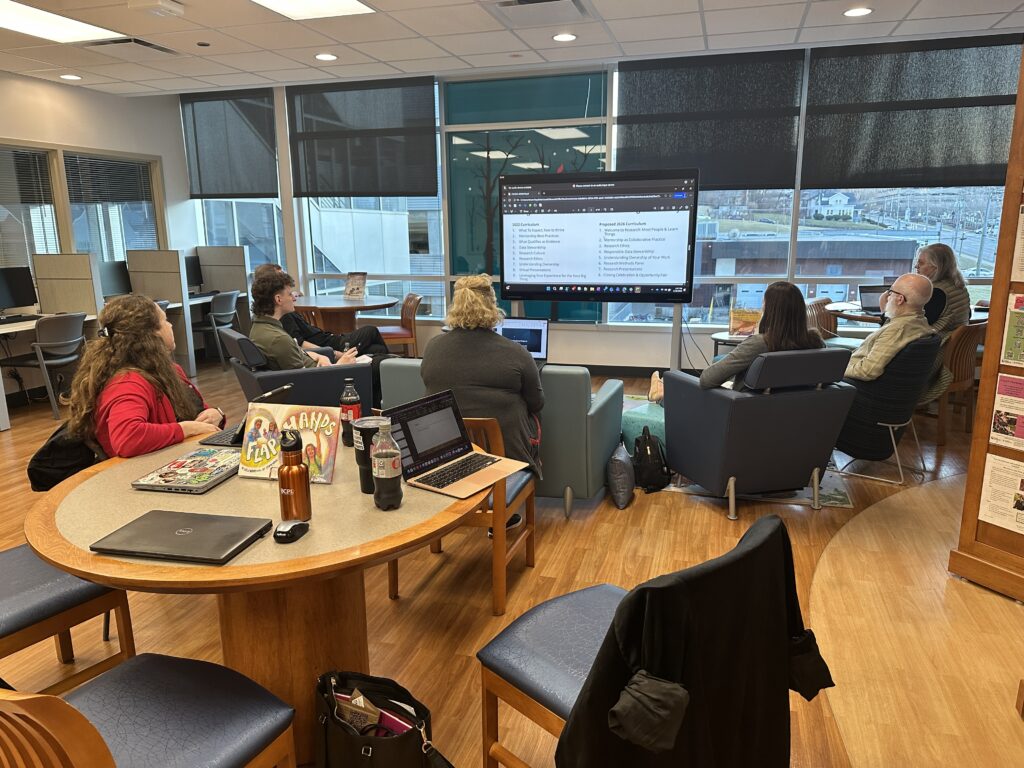
The CAHSLA Education Meeting focused on Lightning Talks was held at the Rubinstein Library on February 18. The short, engaging presentations highlighting the great work, ideas, and expertise across our organization were enjoyed by all.
Attendees: Aja Bettencourt-McCarthy, Matthew Cooper, Jim Damico, Emily Kean, Amy Koshoffer, Brian McConnell, Crissy Ross, Lynn Warner